|
Détails sur le produit:
|
| Item:: | UHMWPE Self-lubricating Surface Hockey Artificial Ice Tiles Skating Rink | Material: | 100% virgin PE |
|---|---|---|---|
| Color:: | Natural White | Size:: | 40' wide x 60' long |
| Thickness:: | 5-200mm | Finish:: | Finish: Matte on 2 sides |
| Processing Service:: | Cutting, Moulding | ||
| Mettre en évidence: | Panneau synthétique de patinoire,UHMWPE Ski Surface artificiel,Feuille en plastique Ski Surface artificiel |
||
Section 1 - Attribute records
Tangyin Taixing Engineering Plastics Co., Ltd. supplies this sheet as a skating surface, under model number Synthetic Ice Rink Panel, in 100 percent virgin PE, natural white, matte on both faces, in the recorded thickness range 5 - 200 mm. The recorded processing service is cutting and moulding, and the recorded application is a hockey and skating rink surface laid from sheets rather than a poured or frozen slab.
| Attribute | Recorded value |
|---|---|
| Model number | Synthetic Ice Rink Panel |
| Manufacturer | Tangyin Taixing Engineering Plastics Co., Ltd. |
| Item name on record | UHMWPE Self-lubricating Surface Hockey Artificial Ice Tiles Skating Rink |
| Material | 100% virgin PE |
| Colour | Natural white |
| Finish | Matte on 2 sides |
| Thickness range | 5 - 200 mm |
| Recorded layout size | 40 ft wide x 60 ft long |
| Processing service | Cutting, moulding |
| Certification | ISO9001 quality management system |
| Place of origin | China |
| Minimum order quantity | 100 kilograms |
| Price basis | Negotiable |
| Payment terms | T/T, Western Union |
| Supply ability | 50000 kilograms per month |
| Delivery time | 15 - 20 days after deposit received |
| Packaging | Wooden crate or pallet |
Two records needed reconciling. The size attribute reads 40 ft wide x 60 ft long, which is the footprint of a rink rather than the size of one sheet, while the description records sheet sizes of 1200 x 2400 mm and 1000 x 2000 mm with other sizes cut to order; the footprint is therefore treated as the rink this panel is intended for, and the 1200 x 2400 mm and 1000 x 2000 mm sheets as the units that make it. Thickness is recorded twice, as 5 - 200 mm in the attribute record and as 15 - 20 mm in the description table; the attribute range governs the listing and the 15 - 20 mm figure is the rink-panel thickness the description describes.
| Record | Value | How it is read |
|---|---|---|
| Panel size 1 | 1200 x 2400 mm | Sheet unit for a rink layout |
| Panel size 2 | 1000 x 2000 mm | Second recorded sheet unit |
| Other sizes | Customized | Cut to the rink drawing |
| Rink footprint | 40 ft wide x 60 ft long | The installed area, not a sheet size |
| Panel thickness in the description | 15 - 20 mm | Thickness the rink description describes |
| Thickness range in the attribute record | 5 - 200 mm | Range from which the ordered thickness is taken |
| Property | Recorded value | Meaning for a skating face |
|---|---|---|
| Tensile strength | > 30 MPa | Face resists being pulled by the skate edge |
| Compressive strength | >= 42 MPa | Carries the skate point without sinking |
| Impact strength | >= 140 KJ/m2 | Takes a fall or a stick strike without cracking |
| Water absorption | < 0.01% | Panel does not swell out of the joint |
| Surface resistivity | 4.9 x 10^13 ohm | Recorded electrical surface value of the sheet |
| Friction coefficient | < 0.09, printed with a percent sign in the description | Glide value behind the skating claim |
One formatting fault in that last row is worth naming rather than hiding: the friction coefficient is printed as a percentage in the description, which is not a valid unit for a coefficient, so the number is treated as a coefficient value and the percent sign as a typographical error in the source table.
Section 2 - Construction
A synthetic rink is a floor made of sheets. Each Synthetic Ice Rink Panel from Tangyin Taixing Engineering Plastics Co., Ltd. is a solid virgin PE sheet, matte on both faces, cut to a recorded size such as 1200 x 2400 mm or 1000 x 2000 mm and laid edge to edge on a subfloor. The skating experience is decided by three things that have nothing to do with the sheet in isolation: how flat the subfloor is, how tight and level the joint between sheets is, and whether the panel thickness is enough to stop the sheet deflecting under a skate point.
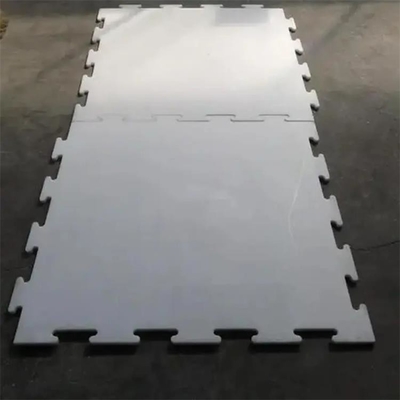
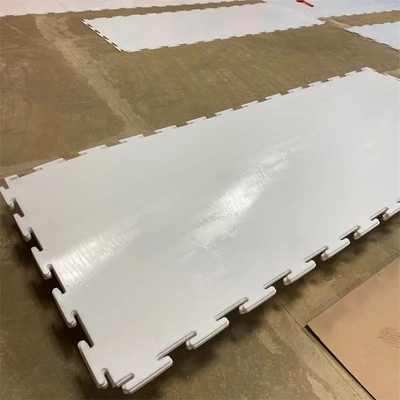
The description records that the sheets can join together stably and that the resulting surface is very flat, which is the whole reason the product works: a skate blade crossing an open joint catches, and a rink with a lipped joint damages edges and skaters alike. The actual joint geometry is not recorded numerically in this listing, so the way the panels are held together at the edge has to be confirmed against the rink design before the order is placed, not assumed from the sheet size.
Because the sheets are cut to order, joint position is a layout decision. Running joints in line with the main skating direction, and staggering the cross joints, keeps blade crossings predictable. The description's phrase about a combine method is a statement about the result, a stable, flat, joined surface, and this page does not add a connector type that the record does not name.

The description puts rink panels at 15 - 20 mm, inside the listing's recorded 5 - 200 mm range, and that thickness is what spreads a skate point load sideways to the subfloor. A thin sheet over a soft subfloor deflects under the point of the blade, and a deflecting sheet opens its joints as it moves; a thicker sheet spreads the same load over a wider area and holds the joint line. Compressive strength is recorded at 42 MPa or more, so the material is not the weak link - the support under it is.
Matte finish on both faces is recorded, and it matters more than it appears: the matte face is the skating face, and the same matte face sits against the subfloor, so the panel can be laid either way up. A gloss face against a subfloor slides, and a sliding panel walks its joints open under skating load.
The recorded friction coefficient of less than 0.09 is the number behind the glide claim, and it is achieved by the material itself: no wax, no lubricant and no refrigeration are recorded as required. What maintains that value in service is cleanliness. Grit that lands on the surface is pressed into the sheet by skate pressure, and a face carrying embedded grit has a higher friction than the value recorded for clean material.
Surface resistivity is recorded at 4.9 x 10^13 ohm, which places the sheet at the insulating end of the scale rather than in a conductive grade, so any static control on the rink has to come from the building rather than from the panel. No anti-static claim is made here beyond that recorded number.
The description records flexible siting and easy assembly and disassembly, which means the panel is expected to be laid on a prepared floor rather than bonded to it. Flatness of that floor is the single largest influence on joint quality, because a panel bridges a hollow but cannot close a hump. Around the perimeter, the rink needs an edge restraint that holds the outermost panel against skate push; this is a rink design item and is not part of the sheet.
Section 3 - Boundaries and installation
The recorded application for the Synthetic Ice Rink Panel from Tangyin Taixing Engineering Plastics Co., Ltd. is skating rinks, figure skating, regular skating, carnival celebrations, hockey, shows and family entertainment, indoors or outdoors, in any season. That breadth comes from the material being a solid PE sheet with a recorded low friction coefficient and no refrigeration requirement, not from any climate control built into the panel.
Temporary and seasonal rinks are the clearest fit, because the sheets are cut to size, packed in a crate or on a pallet and can be taken up again. Indoor arenas that want a practice strip beside a real ice pad also suit it, as do event floors where a rink is needed for days rather than years. Because the panel needs no power and no wax, a site without plant services can still run a rink.
This is a skating surface, not a structural floor. It is not a load-bearing deck for vehicles, and it is not a replacement for a concrete slab. Outdoors, a panel laid on grass or gravel will not hold a flat joint line, so the siting claim in the description presumes a prepared base. Nor is the sheet a friction-reducing liner for a chute or a bunker: the same low friction that makes a skate glide would let bulk material slide, but the panel is supplied as a rink sheet and is not recorded for that duty.
Prepare and clean the subfloor first, then set the perimeter datum and lay the first row of panels against it. Work outward from that datum rather than from the middle, so any cut panels end up at one edge where they can be trimmed to the rink boundary. Keep the matte face up, check each joint with a straight edge as it is closed, and do not walk on a freshly laid area in grit-covered footwear.
Leave the panel acclimatised in the room where it will be laid before closing the joints, because a sheet that is colder or warmer than the floor will change size after installation and open the joints it was fitted with. The description records no expansion gap figure, so the allowance has to be set by the installer from the rink size and the site temperature range.
Run a straight edge across every joint in both directions and feel for a lip; a lip that can be felt through a glove will catch a blade. Check the perimeter restraint is fixed before the surface is skated. Sweep the whole area, because a single piece of grit under a blade scores the face on the first pass. Confirm the panel thickness delivered matches the ordered value, since the description puts rink panels at 15 - 20 mm inside a 5 - 200 mm listing range and a thin sheet over a soft base will show as joint movement within a session.
Section 4 - Manufacturer
Tangyin Taixing Engineering Plastics Co., Ltd. is an engineering plastics manufacturer combining production, sales, design and processing, with more than 20 years of experience, a plant area of more than 25,000 square metres and an annual output of more than 8,000 tons. Its stated range covers UHMWPE board, synthetic ice rink, PE marine fender, outrigger pad, UHMWPE liner, plastic conveyor roller, UHMWPE special-shaped parts, HDPE sheet, HDPE ground protection mat and dual colour HDPE sheet, and the synthetic ice rink is a named line in that range rather than a by-product of sheet sales.
The recorded processing service for this panel is cutting and moulding, which maps onto specific equipment: the moulding press produces the sheet, and the CNC precise finishing machine and carving machine cut the recorded 1200 x 2400 mm and 1000 x 2000 mm sizes and any custom outline. Where a rink needs a shaped perimeter or a cut-out, the same machining centres produce it from the drawing. The sander is what a matte finish on two sides depends on, since the face condition is a finishing operation rather than a property of the raw sheet. In the laboratory, the universal mechanical tester stands behind the recorded tensile, compressive and impact values, and the abrasion tester behind the wear behaviour of the skating face.
ISO9001 is recorded for Tangyin Taixing Engineering Plastics Co., Ltd. as a quality management system covering the manufacture of polyethylene sheet and machined plastic products. It is a system certification, not a product approval and not a material test report, so it describes how the factory is run and does not certify the friction or impact figures of any individual panel. The company profile page and the site footer additionally record Beijing Silk Road Enterprise Management Services Co. as the export-management name for the same engineering-plastics business; the two names describe one manufacturing and export organisation.
| Term | Recorded value | What it means for a rink project |
|---|---|---|
| Minimum order | 100 kilograms | Allows a sample area or a small event rink as a first order |
| Supply ability | 50000 kilograms per month | Sufficient for seasonal rink builds, but plan early for a large arena |
| Delivery | 15 - 20 days after deposit | Fits a seasonal opening if the layout is agreed first |
| Packaging | Wooden crate or pallet | Keeps sheet edges and corners intact to the site |
| Payment | T/T, Western Union | Deposit date starts the delivery window |
| Price | Negotiable | Quoted from sheet size, thickness and cut layout |
The commercial profile suits a phased build: 100 kilograms is enough to lay a test area, the monthly figure of 50000 kilograms sets the practical ceiling on how big a single season order can be, and the 15 - 20 day window means a rink that opens at the start of a season has to be ordered with the layout already settled. Packaging in a crate or on a pallet protects the sheet edges, which is where a chipped corner would show as a joint defect on the finished rink.
Section 5 - Buyer FAQ
The size attribute of the Synthetic Ice Rink Panel records 40 ft wide x 60 ft long, and that is the footprint of the rink, not the size of a sheet in the crate. The sheets recorded in the description are 1200 x 2400 mm and 1000 x 2000 mm, with other sizes cut to order, so a rink is built from many panels rather than supplied as one piece.
Give Tangyin Taixing Engineering Plastics Co., Ltd. the rink outline and the preferred panel size, and let the cut layout be produced from it. Choosing 1200 x 2400 mm panels reduces the number of joints on a large rink, while 1000 x 2000 mm panels are easier to carry through a doorway and to handle by hand on a temporary build.
The description records rink panels at 15 - 20 mm, which sits inside the listing's recorded 5 - 200 mm range. Thickness works by spreading the skate point load sideways to the subfloor, so the right value depends on how stiff the base is: a rigid, flat floor allows the thinner end of the recorded range, and a base with any give needs the thicker end.
Compressive strength is recorded at 42 MPa or more, so a properly supported Synthetic Ice Rink Panel from Tangyin Taixing Engineering Plastics Co., Ltd. does not crush under a skate; what happens instead is that a thin panel flexes and works its joints. If the rink is to be skated hard by adults, order at the upper part of the 15 - 20 mm band rather than the lower.
The description records that the sheets join together stably and that the finished rink surface is very flat, which is the property that makes the product skateable. It does not record a joint profile or a connector dimension, so the edge detail has to be agreed for the specific rink rather than assumed from the sheet size.
Two things at installation decide the result for a Synthetic Ice Rink Panel from Tangyin Taixing Engineering Plastics Co., Ltd. delivered to site: the flatness of the subfloor under the joint, and the care taken to close each joint level. A panel bridging a hollow sits high at the joint, and high joints are what catch a blade, so the floor is prepared before any sheet is laid.
PE sheet changes size with temperature, and a rink is a large continuous area of it, so the layout needs an allowance at the perimeter and at any fixed abutment. This listing does not record an expansion gap value, which means the allowance must be set by the installer from the rink dimensions and the temperature range the site will see.
The practical approach with the Synthetic Ice Rink Panel from Tangyin Taixing Engineering Plastics Co., Ltd. is to let the panels sit in the rink room long enough to reach room temperature before the joints are closed, and to keep the perimeter free to move under its edge restraint. Panels laid cold and then warmed in a heated hall will otherwise close up and lift at the centre.
The finish record for the Synthetic Ice Rink Panel is matte on two sides, and the description states that no wax and no lubricating oil are needed. Cleaning is therefore mechanical rather than chemical: sweep or vacuum the surface to remove grit before each session, because grit pressed into the face by a skate raises friction above the recorded coefficient of less than 0.09.
For a deeper clean, use a mop with a neutral cleaner and let the surface dry before skating. Do not use an abrasive pad on the matte face supplied by Tangyin Taixing Engineering Plastics Co., Ltd., because the matte texture is the skating surface and polishing it changes the glide the panel was selected for.
Yes. The minimum order quantity recorded for the Synthetic Ice Rink Panel is 100 kilograms, which for sheet is a small area rather than a full rink, so a buyer can lay a test section or a display piece before committing to the whole floor.
Use the trial area to check two things with Tangyin Taixing Engineering Plastics Co., Ltd.: that the delivered thickness matches the ordered value inside the 5 - 200 mm range, and that the matte face glides as expected under the skates that will actually use the rink. A test panel costs far less than discovering a joint or thickness problem across a full 40 ft by 60 ft rink.
Delivery is recorded as 15 - 20 days after the deposit is received, and monthly supply ability at 50000 kilograms. For a seasonal rink the binding constraint is the calendar: the panels have to arrive, acclimatise and be laid before the opening date, so the order has to be placed with the layout already approved.
Because the monthly figure is finite, a large arena order of Synthetic Ice Rink Panel from Tangyin Taixing Engineering Plastics Co., Ltd. should be discussed early rather than assumed to ship in one lot. Confirm the split across shipments when the order is placed, and keep the joint layout drawing with the order so a second shipment matches the first.
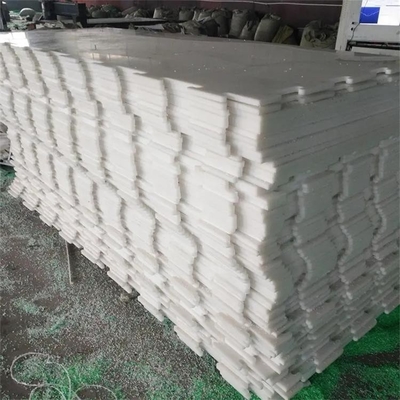
Packaging is recorded as a wooden crate or a pallet. For sheets this is the right form, because a crate keeps the panels flat and stops the edges from being damaged in transit, and the edge is exactly what a joint depends on.
On arrival, check the panel count and the thickness against the packing list before the crate is broken down, and inspect the sheet edges for chips. A chipped edge on a Synthetic Ice Rink Panel from Tangyin Taixing Engineering Plastics Co., Ltd. becomes a joint fault or a rejected perimeter cut, and a short count is only provable before the packing list is signed.
Section 6 - Receiving
Personne à contacter: Mr. Sales
Téléphone: +86 152 1104 0646


 French